Home Is...
“All human actions have one or more of these seven causes: chance, nature, compulsions, habit, reason, passion, desire.” - Aristotle
Where is your home? I am not talking about the building you live in but rather where your heart lives. Home is where your heart is and where you spend most of your time.
Is my home working on my fitness, my gym schedule? Am I running everyday no matter the weather? Is running my home?
Or, is my home my work where all my focus is about increasing my wealth or my status? Or, could my home be my relationship, my family, or my cell phone? Where do I spend an inordinate amount of time, which may or may not be intrusive to the rest of my life?
Home used to be about family. A place you called your sanctuary. A place you returned to at Christmas. Home is whatever we are drawn to. What brings you back time and again? Is this still family or is this changing to something else?

When we look for our home, which is our go to place, we need to consider what are our passions, our compulsions, or our habits. It may even be difficult to differentiate between these constructs.
What is the difference between these behaviors and how can we stay on the healthier side of them? Obviously, our passion appears to be a better pursuit than a compulsion or habit but where is the fine line? And, how do these behaviors shed light on what I consider to be my home?
“Great dancers are not great because of their technique they are great because of their passion.” – Martha Graham
Having a Passion
Passion is defined here as any strong compelling emotional connection to your enthusiasm, or desire for anything. Passion is first and foremost an investment. Whatever your passion is you will have to invest your time and your effort to build and master your skills.
A passion demands and commands your attention. You will willingly invest your time and energy in dedication to your passion. There will usually be a congruent relationship between your values, enjoyment and your identity that connects and maintains your passion.
Having a Compulsion
A compulsion differs from passion in that it is more of a response to some distress. The distress may emanate from obsessive or intrusive thoughts. Compulsion leads to responses to obsessive, intrusive thoughts.
When someone feels distressed, they tend to act in ways that are perceived to reduce their distress. Compulsions are repetitive mental actions designed to alleviate feelings of discomfort. Unlike a passion, compulsions appear to be about unwanted thoughts and feelings that are hard to control.
“Chains of habit are too light to be felt until they are too heavy to be broken.”
Warren Buffett
Having a Habit
Passions and compulsions both appear to be similar to habits. Habits will usually require some environmental cue, which triggers the repetitive behaviour. Through positive reinforcement this feedback loop is remembered and repeated. Habits like passions and compulsions, instigate repetitive actions.
When people say they have a bad habit it usually means they are doing something they would rather not be doing. Because habitual behaviour is triggered in the subconscious these so-called bad habits may be difficult to quit.
Overlap
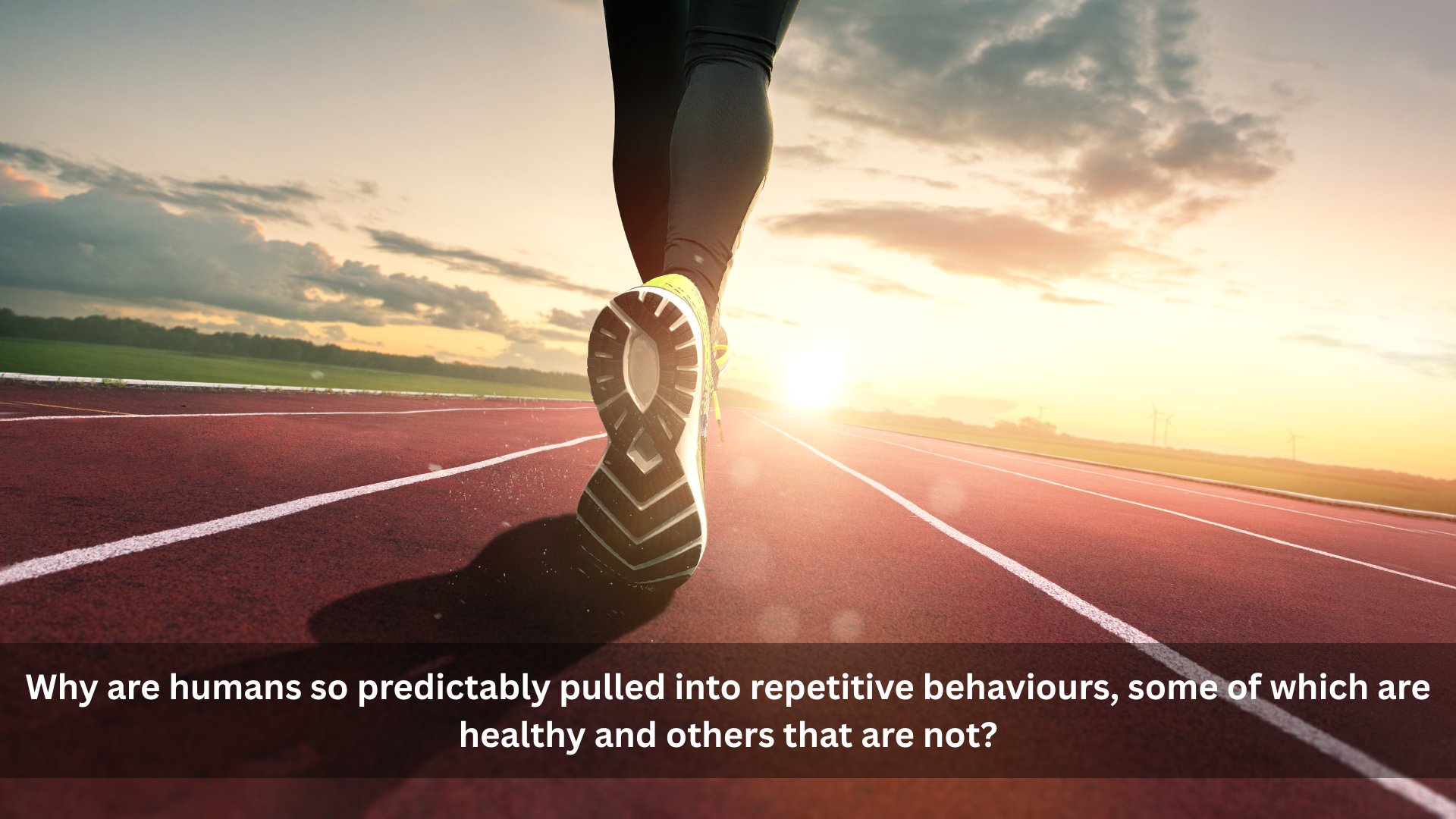
Not surprisingly, many activities overlap the concepts of passion, compulsion, and habit. Take repetitive exercise, running or gym work for instance. Could this be a passion? Yes, it could be. I might be training for my career as a professional or Olympic athlete, which is my passion.
Could repetitive exercise be a compulsion. Yes, it could be. What if I am anorexic and I have obsessive and intrusive negative thoughts about weight gain. My exercise relieves some of my potential distress about feeling I might be overweight.
Could repetitive exercise be a habit? Yes, it could be. My routine is to get my running gear on by 5am and be on the road by 5:15. My gym work is Monday, Wednesday, and Friday after work. My feedback loop is ingrained in my subconscious and has become habitual.
Are there any other activities that could demonstrate the overlap between a person’s passion, compulsion, or habitual behaviour? Yes, there are multiple examples. Almost any activity we can think of has the potential for this overlap. Why is this the case? Why are humans so predictably pulled into repetitive behaviours, some of which are healthy and others that are not? And, is this pull an indication of where our home really is located today?
Home Is…
Could it be we are looking for our home, even if it is unhealthy? Home is where the heart is, right? Home is where we want to be most of the time.
In today’s world, the cell phone has become the home where most of the population wants to be most of the time. On that cell phone, you can find your passion, become obsessive and compulsive, become habitual. The cell phone seems like the new place we call home, especially for 7-9 hours a day, which is the average for those young people between the ages of 18-24.
According to AI, 66% of the world's population is unable to go anywhere without their smartphones. The average person goes to their cell phone 96 times per day, and 46% of people worldwide spend over 5 hours daily on their screens. Is the cell phone our new home? Follow your actions. Your passions, compulsions and habits are a road map to what represents your true home.
In today’s world, most people are still looking for that place to zone out or be distracted, a place to feel at home. Where is your home? Your home is where your needs can be met and your wants can feel satisfied. Your home is your "go to" place. Ask yourself, what is your passion, your compulsion or your habit? Wherever that place is, that is your home.
Counselling with a client-centred focus
Our experienced psychologists work on an individual need’s basis, creating a safe, relaxed and welcoming space, where you can feel free to be yourself. To book your in-person session, please reach out to our friendly team today.
Contact Us